
NCDs represent one of Rwanda's fastest-growing health burdens and one of its most neglected equity dimensions. HBR's NCD program is grounded in the conviction that prevention is a structural obligation, and that people already living with NCDs deserve to be explicitly prioritized in health system design, community programming, and insurance policy.
The Challenge
Non-communicable diseases, including cardiovascular diseases, diabetes, hypertension, cancer, chronic respiratory conditions, and mental health disorders, now account for a significant and rapidly rising share of Rwanda's disease burden. Yet the national health system remains disproportionately oriented toward infectious disease response, leaving people living with NCDs structurally Highrisk/underserved/vulnerable.
The consequences of this orientation gap are severe and inequitable. People living with NCDs in Rwanda face a compounding set of barriers: NCD medicines are frequently excluded from the community-based health insurance (Mutuelle de Santé) benefits package, pushing costs onto the poorest households; primary health care facilities often lack trained personnel and diagnostic tools for chronic disease management; and community health workers, Rwanda's frontline health infrastructure, are rarely equipped or mandated to screen, refer, or support NCD patients.
Beyond access to treatment, NCD prevention receives inadequate attention and investment. Risk factors, including tobacco use, physical inactivity, harmful alcohol consumption, unhealthy diets, and air pollution, remain insufficiently addressed at the community level, particularly for low-income populations and those in rural settings who have the least ability to absorb the long-term consequences of preventable chronic illness.
People living with NCDs who also belong to other vulnerable/high-risk groups, women, adolescents, key populations, people with disabilities, and those in poverty, face intersecting barriers that multiply their disadvantage and deepen their exclusion from care.
"NCD is not a disease of wealth in Rwanda. It is a disease of underfunding, and the most underfunded are always the most vulnerable." - Founder
Our Approach
HBR addresses NCDs across two mutually reinforcing dimensions:
- primary and secondary prevention on the one hand, and
- Equity-centered care prioritization for those already living with NCDs, on the other hand.
Both dimensions are essential, and neither is sufficient without the other.
DIMENSION 1: NCD PREVENTION
Prevention is HBR's first line of response.
We invest in community-level primary prevention programming that addresses the modifiable behavioral and environmental risk factors for NCDs, delivered through Rwanda's community health system and social infrastructure.
Our prevention work is grounded in the understanding that prevention is not merely a medical intervention; it is a social and political one. Effective NCD prevention requires changing the conditions that drive unhealthy behavior, rather than merely persuading individuals to change. Poverty, food insecurity, occupational hazards, built environment limitations, and psychosocial stress are all NCD risk factors, and they are all concentrated among the most vulnerable/high-risk.
Prevention Interventions
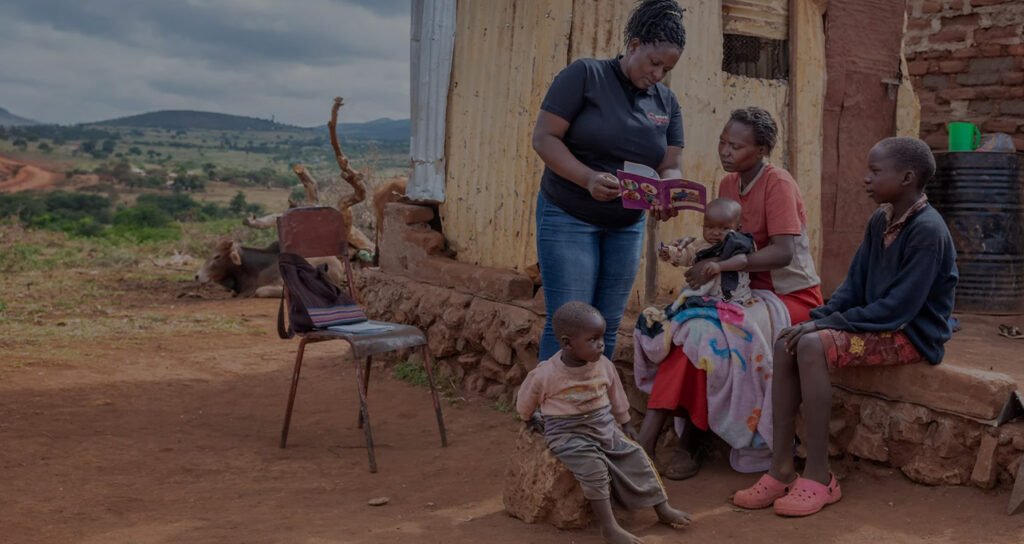
- Community NCD screening campaigns, blood pressure, blood glucose, BMI, and respiratory function, integrated into existing CHW home visit programs
- Behavioral risk factor reduction programming targeting tobacco, alcohol, physical inactivity, and dietary habits, adapted for low-literacy communities
- Integration of NCD prevention messaging into RCCE campaigns and community health education sessions
- Advocacy for school-based NCD prevention curricula covering nutrition literacy, physical activity, and mental health
- Environmental health advocacy on indoor air pollution (cooking fuel), occupational exposure, and urban planning for active mobility
- Support for community vegetable gardens and nutrition security initiatives in partnership with local cooperatives
- Mental health promotion programming, addressing depression, anxiety, and psychosocial risk factors as NCD precursors
DIMENSION 2: PRIORITIZING PEOPLE LIVING WITH NCDS
For people already living with NCDs, HBR unequivocally advocates their explicit prioritization within Rwanda's health system. This is not an argument for creating parallel systems; it is an argument for ensuring that the universal health coverage Rwanda has committed to is genuinely universal: inclusive of, and responsive to, the specific needs of people with chronic, non-communicable conditions.
People living with NCDs require continuous, long-term care management, a fundamentally different service model than episodic or acute care. HBR's work ensures that Rwanda's health system evolves to accommodate this reality, rather than forcing NCD patients to navigate a system designed for someone else.
NCD Care Equity Interventions
- Advocacy for the inclusion of essential NCD medicines, including antihypertensives,antidiabetics, statins, bronchodilators, and select mental health medications, in theMutuelle de Santé (community-based health insurance) benefits package, reducingcatastrophic out-of-pocket expenditure for chronic disease management.
- Community-based NCD chronic disease management support groups, providing peersupport, treatment adherence education, and self-monitoring training for patients withhypertension, diabetes, and other chronic conditions
- Capacity building for community health workers (CHWs) in NCD identification,monitoring, treatment adherence support, and referral, expanding Rwanda's CHWmandate to include chronic disease systematically.
- Integration of NCD care pathways into health facility strengthening programs, ensuringprimary health centers can provide basic chronic disease management without requiringconstant referral to district hospitals
- NCD-sensitive GSRH programming, addressing the intersections between NCDs andreproductive health (e.g., gestational diabetes, hypertension in pregnancy, hormonalcontraception, and cardiovascular risk)
- Evidence generation on the NCD burden among key populations, people living with HIV,people who inject drugs, survivors of GBV, who experience elevated NCD risk but arerarely included in NCD surveillance
- Advocacy for disaggregated NCD data collection by gender, age, socioeconomic status,and geographic location, to expose the equity dimensions of Rwanda's NCD burden
- Policy briefs and parliamentary engagement on NCD financing, the NCD component ofRwanda's national health accounts, and the gap between NCD burden and NCDinvestment
- Training for health facility staff and CHWs on disability-sensitive care, including physicalaccessibility audits and adaptive management for NCDs in people with disabilities,addressing mobility and communication barriers.
The Equity Case: Why NCDs Must Be Prioritized Now?
HBR makes a deliberate and urgent equity argument for prioritizing NCDs in Rwanda's health agenda, not as a future consideration but as an immediate obligation. The evidence is unambiguous:
- NCDs disproportionately affect people in poverty, who cannot absorb the long-term costs of unmanaged chronic disease, including lost productivity, hospitalization, and catastrophic health expenditure
- Women bear a disproportionate NCD burden, including conditions linked to reproductive health (cervical and breast cancer, hypertension in pregnancy, hormonal and metabolic disorders), and are simultaneously the primary caregivers for family members with NCDs
- Adolescents and young people are increasingly exposed to NCD risk factors, and the behavioral patterns established in youth carry lifetime consequences. Preventioninvestment now is the most cost-effective intervention available.
- Rwanda's aging population will dramatically increase NCD prevalence over the coming decade, making early system adaptation a strategic necessity rather than merely a moral one.
- The interaction between NCDs and infectious diseases, particularly HIV, TB, and malaria, creates complex comorbidity patterns that current integrated service delivery models are not yet designed to manage. People living with HIV on antiretroviral therapy, for example, face elevated cardiovascular and metabolic risks that are routinely unaddressed.
HBR's NCD program is therefore not a programmatic add-on. It is a structural argument about who Rwanda's health system is designed for, and a concrete set of interventions to ensure the answer becomes: everyone.