The Challenge
Because evidence without practice translation is a filing cabinet, not a health system
THE RWANDA RESEARCH-TO-POLICY GAP
Rwanda has built a remarkable research capacity in a generation.
Academic, public institutions and a growing ecosystem of international partnerships produce credible, Rwanda-contextualized health research. The problem is what happens after the paper is published.
Research in Rwanda overwhelmingly ends at the journal article. Policy briefs are rarely produced. Civil society organizations, including HBR, rarely participate in the original research design, so the questions asked are rarely those that communities and practitioners most urgently need answered.
And at the community level, the concept of research evidence as a tool for holding systems accountable is almost entirely undeveloped.
HBR's Research-to-Policy-to-Practice program is designed to close the translation gap at three points: between researchers and policymakers, between researchers and communities, and between evidence and structural change advocacy.
Our Approach
HBR reverses the traditional research hierarchy by placing community questions at the start of the evidence cycle and structural advocacy at the end. We serve as a dedicated intermediary infrastructure, closing the translation gap between Rwanda’s research institutions and the policy and practice environments where evidence ultimately must land.
Our approach is explicitly grounded in implementation science (IS) and knowledge translation (KT) theory. We draw on three established frameworks that collectively cover the full research-to-practice pipeline:
Integrated Knowledge Translation (iKT)
HBR embeds civil society organizations, community leaders, and structurally marginalized populations as co-investigators from the moment a research question is formulated, not as post-production dissemination targets. This is the defining feature of iKT: knowledge is produced with those who must use it, ensuring relevance and uptake from the outset.
Knowledge-to-Action (KTA) Cycle
For translating existing evidence into policy and practice, HBR applies Graham et al.’s Knowledge-to-Action framework. This means systematically assessing barriers to knowledge use (provider bias, infrastructure gaps, policy misalignment), tailoring translation products (policy briefs, data visualizations, legislative talking points) to specific decision-maker contexts, and monitoring knowledge uptake as a formal program output.
EPIS Framework (Exploration–Preparation–Implementation–Sustainment)
For scaling evidence-based interventions across Rwanda’s diverse geographic and socio-cultural contexts, HBR applies the EPIS framework. This structures our scale-up planning around four phases: assessing contextual readiness (Exploration), building local capacity and adapting interventions (Preparation), supporting fidelity-with-flexibility delivery (Implementation), and embedding interventions within existing systems to outlast project
cycles (Sustainment).
These frameworks are not theoretical decoration. They are the operational logic through which HBR selects research partners, designs knowledge translation products, monitors uptake, and reports on the ultimate measure of our Research-to-Policy-to-Practice program: not whether a paper was published, but whether the evidence changed what happens to people.
Our strategy is founded on three pillars:
Demand-Driven Evidence Generation
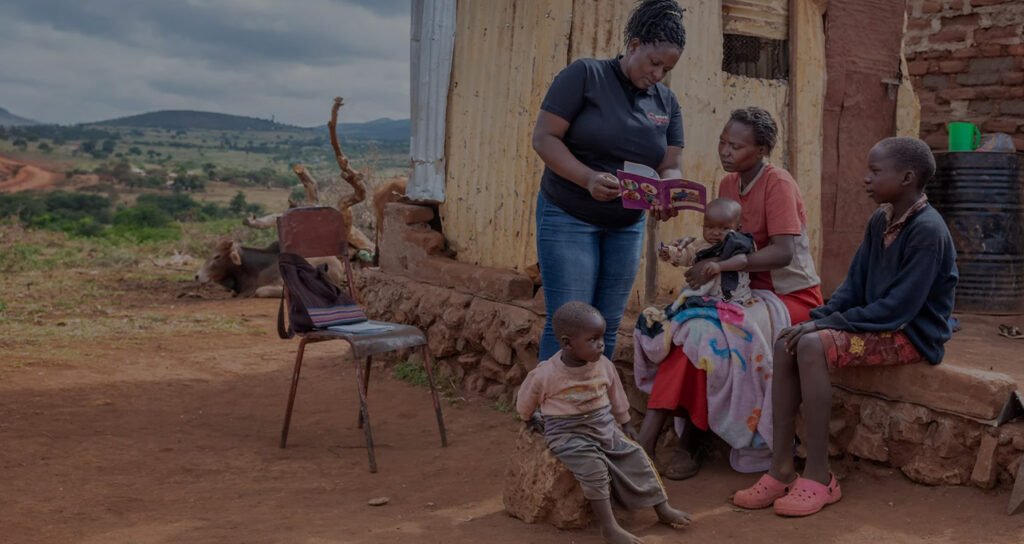
We prioritize participatory research design, actively involving civil society organizations (CSOs), community leaders, and vulnerable populations in formulating research questions and methodologies. This ensures the resulting evidence is relevant and actionable for grassroots advocacy and service-delivery improvements, in line with our principle of Community Sovereignty.
Systematic Evidence Translation
We bridge the gap between academic institutions and policymakers by actively translating complex, peer-reviewed findings into usable, policy-friendly formats, such as concise policy briefs, public media packages, and data visualization tools for the Ministry of Health and Parliament.
Accountability-Focused Practice
We empower communities to use research as a civic tool. This includes integrating data from community-led monitoring (iCLM) with academic evidence, enabling local leaders and health committees to benchmark service quality, hold health facilities accountable for demand, and advocate for policy compliance at the district level.
Key Interventions
- Generation of evidence synthesis and policy briefs specifically on the intersection of climate change, gender, and health outcomes (e.g., displacement, nutrition security, increased vector-borne disease) to drive integrated policy responses.
- Community-Led Monitoring (CLM) and Research: Implementation of Integrated Community-Led Monitoring (iCLM) frameworks across all HBR program areas (GSRH, NCDs, Mental Health) to generate continuous, equity-disaggregated data on servicequality and access barriers.
- Evidence Synthesis and Policy Briefs: Production of 4-6 high-impact, politically neutral policy briefs per year, focused on translating research findings into specific, implementable policy recommendations for Rwanda's Ministry of Health andparliamentary health committees.
- Participatory Research Partnerships: Formal agreements with Rwandan academic institutions to embed CSOs in research design and co-author knowledge translation products.
- Advocacy Toolkits and Data Literacy: Creation of media toolkits, legislative talking points, and community workshops to train advocates on how to interpret and use data, from HBR’s programs and national surveys, to drive policy change.
- Community Score Card Adaptation: Developing and applying evidence-based community score cards that allow vulnerable populations to formally score health services against policy commitments and evidence-based standards of care.
The conviction at HBR is that a research system designed to generate knowledge without systematic translation is one that preserves the status quo. The “system will translate what matters” assumption has never been true in any low-income country health system. Translation does not happen by default. It requires dedicated intermediary infrastructure, which does not currently exist between Rwanda's research institutions and its health policymakers.