
The Challenge
Closing the silence gap, because a mind in pain has the same right to care as a body in pain
THE RWANDA MENTAL HEALTH LANDSCAPE
Rwanda carries one of the world's most complex mental health burdens, shaped by the 1994 Genocide Against the Tutsi, decades of structural poverty, climate-driven livelihood shocks, criminalization of key populations, and the chronic stress of extreme marginalization. Studies estimate that between 25–30% of Rwandans experience symptoms of PTSD, depression, or anxiety, yet the country has fewer than 35 psychiatrists for 14 million people, a ratio of approximately 1:400,000, against the WHO-recommended 1:10,000.
Mental health is not absent from Rwanda's policy agenda; both the 2020 Mental Health Strategic Plan and the third National Health Sector Strategic Plan mention it. What is absent is the community architecture to act on those commitments. Community Health Workers (CHWs), Rwanda's most trusted first-contact health actors, do not have a formal mandate for mental health.
Schools have no systematic early detection structure. Key populations, including people who use drugs, LGBTQ+ individuals, and sex workers, exist entirely outside formal mental health care access. And the single national psychiatric facility, Caraes Ndera, serves a country of 14 million with 280 inpatient beds.
HBR's Mental Health program does not attempt to build a parallel psychiatric system. It closes three specific structural gaps:
1. The community detection gap,
2. The adolescent and men prevention gap, and
3. The radical exclusion gap for key populations.
Our Approach
Our approach reverses the assumption that mental health is a tertiary, specialist-only problem that must be solved in a hospital setting. Instead, we treat mental health as an immediate community health and human rights issue, embedding detection, promotion, and support into Rwanda’s existing primary health care infrastructure, community architecture, and key population networks. Our work focuses on building the capacity of non-specialist care providers (CHWs, teachers, peer educators) to deliver trauma-informed, community-led psychological first aid and referral.
Our strategy is anchored in closing the three structural gaps identified above:
Decentralizing Detection
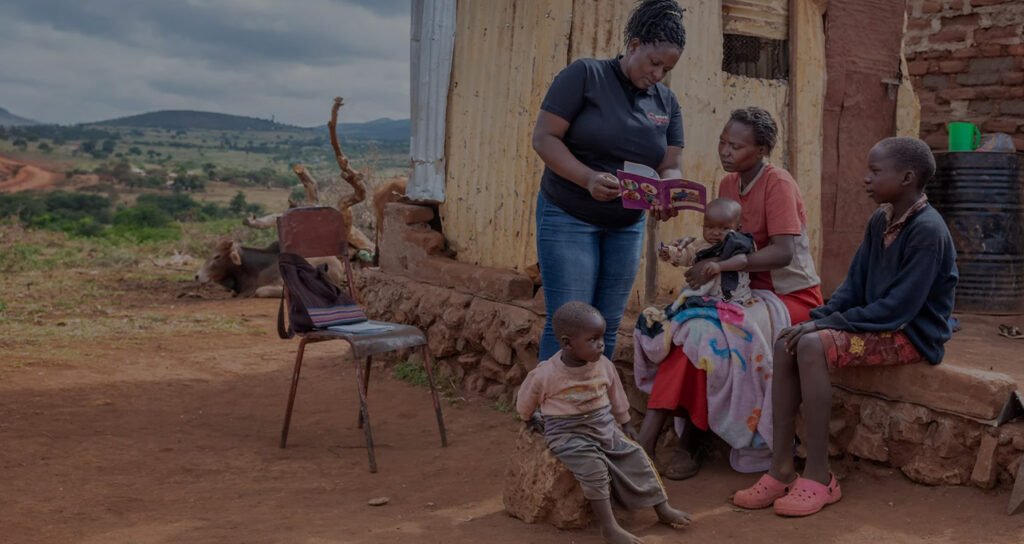
We partner with the Ministry of Health to develop and pilot a formal, simplified mental health screening and referral protocol for Community Health Workers (CHWs) and other frontline health providers, positioning them as the most accessible point of mental health contact for remote and rural communities.
Structural Prevention for Youth
We move beyond individual counseling to implement school- and community-based mental health promotion programming that addresses the structural risk factors for youth mental health challenges, including stigma, academic stress, poverty, and age-based barriers to sexual and reproductive health access (linking to Program Area 1: GSRH).
Radical Inclusion in Care
We co-design peer-led, stigma-free support groups and services for key populations (e.g., people who use drugs, LGBTQ+ individuals) who are excluded from formal mental health care due to criminalization and discrimination. This approach ensures dignity without condition, creating safe spaces for psychosocial support and adherence to dual diagnosis care plans.
Key Interventions
- Integration of Mental Health First Aid (MHFA) training and supervision into the Community Health Worker (CHW) curriculum.
- Development of culturally relevant, low-literacy-friendly screening tools for common mental disorders (depression, anxiety, PTSD).
- Establishment of peer-support networks for mental health management among key populations, utilizing the existing peer education model from HIV programming.
- School-based mental health literacy and resilience-building curricula for teachers and students.
- Advocacy for the inclusion of essential psychotropic medications in the Mutuelle de Santé (community health insurance) benefits package.
- Community-driven campaigns to challenge mental health stigma and promote care-seeking behavior.